Wednesday, 29 May 2013

Wednesday, 20 March 2013
Brain tumor

A brain tumor, or
tumour, is an intracranial
solid neoplasm, a tumor (defined as an abnormal growth of cells)
within the brain or the
central spinal canal.
Brain tumors include all
tumors inside the cranium or
in the central spinal canal. They are created by an abnormal and uncontrolled cell division, usually in the brain
itself, but also in lymphatic tissue, in
blood vessels, in the cranial nerves, in the
brain envelopes (meninges), skull, pituitary gland, or pineal gland. Within the
brain itself, the involved cells may be neurons or glial cells (which include astrocytes, oligodendrocytes, and ependymal cells). Brain
tumors may also spread from cancers
primarily located in other organs (metastatic tumors).
Any brain tumor is
inherently serious and life-threatening because of its invasive and infiltrative
character in the limited space of the intracranial cavity. However, brain tumors
(even malignant ones) are not invariably fatal, especially lipomas which are inherently benign. Brain tumors or
intracranial neoplasms can be cancerous (malignant) or non-cancerous (benign); however, the
definitions of malignant or benign neoplasms differs from those commonly
used in other types of cancerous or non-cancerous neoplasms in the body. Its
threat level depends on the combination of factors like the type of tumor, its
location, its size and its state of development. Because the brain is well
protected by the skull, the early detection of a brain tumor occurs only when
diagnostic tools are directed at the intracranial cavity. Usually detection
occurs in advanced stages when the presence of the tumor has caused unexplained
symptoms.
Primary (true) brain
tumors are commonly located in the posterior cranial fossa in children and in the anterior two-thirds of
the cerebral hemispheres in adults, although they can
affect any part of the brain.
history of chrysanthemum
 Chrysanthemums were
first cultivated in China as a flowering
herb as far back as the 15th century BC.[2] The plant is
renowned as one of the Four Gentlemen in Chinese and East Asian art.
The plant is particularly significant during the Double Ninth
Festival. The flower may have been brought to Japan in the eighth century AD[citation
needed], and the Emperor adopted the flower as his official
seal. The "Festival of Happiness" in Japan celebrates the flower.
Chrysanthemums were
first cultivated in China as a flowering
herb as far back as the 15th century BC.[2] The plant is
renowned as one of the Four Gentlemen in Chinese and East Asian art.
The plant is particularly significant during the Double Ninth
Festival. The flower may have been brought to Japan in the eighth century AD[citation
needed], and the Emperor adopted the flower as his official
seal. The "Festival of Happiness" in Japan celebrates the flower.
The flower was brought
to Europe in the 17th century[citation
needed]. Linnaeus named it from the Greek word χρυσός
chrysous, "golden" (the colour of the original flowers), and ἄνθεμον
-anthemon, meaning flower.
Chrysanthemums entered
American horticulture in 1798 when Colonel John Stevens imported a cultivated variety known as 'Dark
Purple' from England. The introduction
was part of an effort to grow attractions within Elysian Fields in Hoboken, New Jersey.[3]
Sunday, 3 March 2013
Huayna picchu

Huayna Picchu
also known as Wayna Picchu (Quechua: "Young Peak") is a mountain in Peru
around which the Urubamba
River bends. It rises over Machu Picchu, the so-called lost city of the
Incas, and divides it into sections. The Incas built a trail up the side of the Huayna Picchu and
built temples and terraces on its top. The peak of Huayna Picchu is about 2,720
metres (8,920 ft) above sea level, or about 360 metres (1,180 ft) higher than
Machu Picchu.
According to local
guides, the top of the mountain was the residence for the high priest and the
local virgins. Every morning before sunrise, the high priest with a small group
would walk to Machu Picchu to signal the coming of the new day. The Temple
of the Moon, one of the three major temples in the Machu Picchu area, is
nestled on the side of the mountain and is situated at an elevation lower than
Machu Picchu. Adjacent to the Temple of the Moon is the Great Cavern, another
sacred temple with fine masonry. The other major local temples in Machu Picchu
are the Temple of the Condor, Temple of Three Windows, Principal Temple,
"Unfinished Temple", and the Temple of the Sun, also called the Torreon
Taj Mahal

The Taj Mahal
(/ˈtɑːdʒ məˈhɑːl/ often pron.:
/ˈtɑːʒ/;[1] Hindi: ताज महल, from Persian/Urdu: تاج محل
"crown of palaces", pronounced [ˈt̪aːdʒ mɛˈɦɛl]; also "the
Taj"[2]) is a white marble mausoleum located in Agra, Uttar Pradesh, India. It was built by Mughal emperor
Shah Jahan in memory of his
third wife, Mumtaz Mahal.
The Taj Mahal is widely recognized as "the jewel of Muslim art in India and one
of the universally admired masterpieces of the world's heritage".[3]
Taj Mahal is regarded
by many as the finest example of Mughal architecture, a style that combines
elements from Islamic, Persian, Ottoman
Turkish and Indian architectural styles.[4][5]
In 1983, the Taj Mahal
became a UNESCO World Heritage Site. While the white domed marble mausoleum is the most familiar component of the
Taj Mahal, it is actually an integrated complex of structures. The construction
began around 1632 and was completed around 1653, employing thousands of artisans
and craftsmen.[6]
The construction of the Taj Mahal was entrusted to a board of architects under
imperial supervision, including Abd ul-Karim Ma'mur Khan, Makramat Khan, and Ustad Ahmad
Lahauri.[7][8] Lahauri[9] is
generally considered to be the principal designer.[10]
Dead sea

The Dead Sea
(Arabic: البحر الميت  al-Baḥr
al-Mayyit (help·info),[4] Hebrew: יָם הַמֶּלַח,
Yām HamMélaḥ, "Sea of Salt", also Hebrew: יָם הַמָּוֶת,
Yām HamMā́weṯ, "The Sea of Death"),
also called the Salt Sea, is a salt lake bordering Jordan to the east and Israel and the West Bank to the west. Its surface and shores are 423
metres (1,388 ft) below sea
level,[3] Earth's lowest elevation on land. The Dead Sea is
377 m (1,237 ft) deep, the deepest hypersaline lake in the world. With 33.7% salinity, it is also one of the world's saltiest bodies of
water, though Lake Assal (Djibouti), Garabogazköl and some
hypersaline lakes of the McMurdo Dry Valleys in Antarctica (such as Don Juan Pond) have reported higher salinities.
It is 8.6 times saltier than the ocean.[5] This salinity makes
for a harsh environment in which animals cannot flourish, hence its name. The
Dead Sea is 55 kilometres (34 mi) long and 18 kilometres (11 mi) wide at its
widest point.[1] It lies in the
Jordan Rift
Valley, and its main tributary
is the Jordan River.
al-Baḥr
al-Mayyit (help·info),[4] Hebrew: יָם הַמֶּלַח,
Yām HamMélaḥ, "Sea of Salt", also Hebrew: יָם הַמָּוֶת,
Yām HamMā́weṯ, "The Sea of Death"),
also called the Salt Sea, is a salt lake bordering Jordan to the east and Israel and the West Bank to the west. Its surface and shores are 423
metres (1,388 ft) below sea
level,[3] Earth's lowest elevation on land. The Dead Sea is
377 m (1,237 ft) deep, the deepest hypersaline lake in the world. With 33.7% salinity, it is also one of the world's saltiest bodies of
water, though Lake Assal (Djibouti), Garabogazköl and some
hypersaline lakes of the McMurdo Dry Valleys in Antarctica (such as Don Juan Pond) have reported higher salinities.
It is 8.6 times saltier than the ocean.[5] This salinity makes
for a harsh environment in which animals cannot flourish, hence its name. The
Dead Sea is 55 kilometres (34 mi) long and 18 kilometres (11 mi) wide at its
widest point.[1] It lies in the
Jordan Rift
Valley, and its main tributary
is the Jordan River.
al-Baḥr
al-Mayyit (help·info),[4] Hebrew: יָם הַמֶּלַח,
Yām HamMélaḥ, "Sea of Salt", also Hebrew: יָם הַמָּוֶת,
Yām HamMā́weṯ, "The Sea of Death"),
also called the Salt Sea, is a salt lake bordering Jordan to the east and Israel and the West Bank to the west. Its surface and shores are 423
metres (1,388 ft) below sea
level,[3] Earth's lowest elevation on land. The Dead Sea is
377 m (1,237 ft) deep, the deepest hypersaline lake in the world. With 33.7% salinity, it is also one of the world's saltiest bodies of
water, though Lake Assal (Djibouti), Garabogazköl and some
hypersaline lakes of the McMurdo Dry Valleys in Antarctica (such as Don Juan Pond) have reported higher salinities.
It is 8.6 times saltier than the ocean.[5] This salinity makes
for a harsh environment in which animals cannot flourish, hence its name. The
Dead Sea is 55 kilometres (34 mi) long and 18 kilometres (11 mi) wide at its
widest point.[1] It lies in the
Jordan Rift
Valley, and its main tributary
is the Jordan River.
The Dead Sea has
attracted visitors from around the Mediterranean basin for thousands of years.
Biblically, it was a place of refuge for King
David. It was one of the world's first health resorts (for Herod the Great), and
it has been the supplier of a wide variety of products, from balms for Egyptian mummification to potash for fertilizers. People also use the salt and the
minerals from the Dead Sea to create cosmetics and herbal sachets. In 2009, 1.2 million foreign
tourists visited on the Israeli side.[citation
needed]
Pyramid Giza

The Great Pyramid of
Giza (also known as the Pyramid of Khufu or the Pyramid of
Cheops) is the oldest and largest of the three pyramids in the Giza Necropolis bordering what is now El Giza,
Egypt. It is the oldest of the Seven Wonders of the Ancient
World, and the only one to remain largely intact. Egyptologists believe that
the pyramid was built as a tomb for fourth
dynasty Egyptian
Pharaoh Khufu (Cheops in Greek) over a 10
to 20-year period concluding around 2560 BCE. Initially at 146.5 metres (481
feet), the Great Pyramid was the tallest
man-made structure in the world for over 3,800 years. Originally, the Great
Pyramid was covered by casing stones that formed a smooth outer surface; what is
seen today is the underlying core structure. Some of the casing stones that once
covered the structure can still be seen around the base. There have been varying
scientific and alternative theories about the Great Pyramid's construction
techniques. Most accepted construction hypotheses are based on the idea that it
was built by moving huge stones from a quarry and dragging and lifting them into
place.
There are three known
chambers inside the Great Pyramid. The lowest chamber is cut into the bedrock
upon which the pyramid was built and was unfinished. The so-called[1] Queen's Chamber and
King's Chamber are higher up within the pyramid structure. The Great Pyramid of
Giza is the only pyramid in Egypt known to contain both ascending and descending
passages. The main part of the Giza complex is a setting of buildings that
included two mortuary temples in honor of Khufu (one close
to the pyramid and one near the Nile), three smaller pyramids for Khufu's wives,
an even smaller "satellite" pyramid, a raised causeway connecting the two
temples, and small mastaba tombs
surrounding the pyramid for nobles.
Wednesday, 27 February 2013
tahukah anda..???

Matahari
merupakan bintang terdekat dengan Bumi dengan jarak purata 149,680,000 kilometer (93,026,724 batu). Matahari
dan lapan buah planet membentuk Sistem Suria. Matahari mempunyai diameter
1,391,980 kilometer dengan suhu permukaan 5,500 °C dan suhu teras 15 juta °C.
Matahari dikelaskan sebagai bintang
kerdil jenis G. Cahaya daripada matahari
memakan masa 8 minit untuk sampai ke Bumi
dan cahaya yang terang ini boleh mengakibatkan sesiapa yang memandang terus
kepada matahari, menjadi buta.
Matahari merupakan satu
bebola plasma dengan
jisim sekitar 2 x 1030 kg. Untuk terus bersinar, matahari, yang
terdiri daripada gas panas menukar unsur hidrogen kepada helium melalui tindak balas gabungan nuklear pada kadar
600 juta tan, dengan itu kehilangan empat juta tan jisim setiap saat. Matahari
dipercayai terbentuk pada 5,000 juta tahun lalu. Kepadatan jisim matahari adalah
1.41 berbanding jisim air. Jumlah tenaga
matahari yang sampai ke permukaan bumi
dikenali sebagai pemalar suria menyamai 1.37 kilowatt semeter persegi setiap saat.
rokok
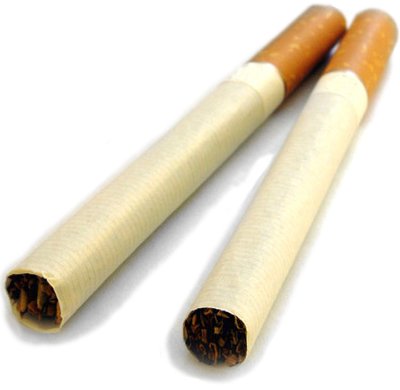
Rokok adalah
silinder dari kertas berukuran panjang antara 70 hingga 120 mm (variasi bergantung kepada negara)
dengan diameter sekitar 10 mm yang berisi daun-daun tembakau yang telah dicacah. Rokok dibakar pada salah
satu hujungnya dan dibiarkan membara agar asapnya dapat dihirup melalui mulut
pada hujung yang lain.
Terdapat dua jenis rokok,
iaitu rokok yang bertapis dan tidak bertapis. Rokok yang bertapis dibuat
daripada bahan busa serabut sintetik
yang berfungsi untuk menyaring nikotin.
Rokok biasanya dijual
dalam bungkusan berbentuk kotak atau kemasan kertas yang dapat dimasukkan dengan mudah ke dalam
kantung. Kebelakangan ini, bungkusan-bungkusan tersebut juga umumnya disertai
dengan pesanan kesihatan yang memperingatkan perokok akan bahaya kesihatan
akibat merokok, misalnya kanser
paru-paru atau serangan jantung.
|
|
tujuh keajaiban dunia - tembok besar china

Tembok Besar China
(Cina
Tradisional: 長城, Cina Ringkas:
长城, pinyin: Chángchéng; harf. "bandar/kota panjang") atau
(Cina
Tradisional: 萬里長城, Cina Ringkas:
万里长城, pinyin: Wànlǐ Chángchéng; harf. "Tembok panjang 10,000
Li (里)"[1]), merupakan satu siri kubu China silam yang
dibina sekitar 200 SM dan diperkukuh antara akhir abad ke-14 sehingga permulaan abad ke-17, semasa Dinasti Ming, untuk melindungi utara China
daripada serangan puak Mongol dan Turkik.
Ia didahului oleh beberapa tembok dibina semenjak abad ke-3 SM terhadap perompak puak-puak nomad yang datang dari kawasan yang dikenali
hari ini sebagai Mongolia dan Manchuria.
Panjang Tembok Besar
China ini ialah kira-kira 6,400 km,[2] daripada Shanhaiguan
sehingga ke Teluk Bohai di
sebelah timur yang terletak berhampiran dengan sempadan China dan Manchuria, sehingga Lop Nur di
sebelah tenggara wilayah Xinjiang.
Pada 2009, satu tinjauan arkaeologi baru menggunakan teknologi termaju
melaporkan yang panjang keseluruhan tembok, dengan segala cabangnya, menjangkau
8,851.8 km (5,500.3 bt).[3][4]
Monday, 25 February 2013
wat i learn 2day
 hye semua...........
ari ni ina belajar cara2 nak letak jam kat blog ina.........
lepas tu...............pilih video..........
mula2 confuse.....then ok........
practise makes everything easy.....:)
n makes our life colourful as rainbow..........
Sunday, 24 February 2013

Monday, 18 February 2013
aktiviti saya..

ari ni saya nak kongsi pasal aktiviti harian saya........
tau x....saya setiap ari memang stress n tension......
isnin ngan rabu ada klas komputer.......
dari isnin hingga khamis ada kls tuisyen...
dah la blk kul 7.30 atau 9.00..kat rumah gaduh ngan adik.....
yang paling sedih...bunga2 yang saya tanam semua mati kehausan.....
dah x de masa nak siramkan........:(
keje sklh jangan cakap la.....tidur pun x cukup masa......
always rushing.......
kat umah anak sulung...setiap ari blk dari sklh kena kemas umah..
susah tau......;(
Sunday, 17 February 2013
latar belakang.
hi frens.......
2day im goin 2 share bout my skul life........
 SEMENTAS..
its a gr8 skul ...i always enjoy my skul days bcoz of d teachers.,
d teachers ter wer very spotting n always support us......
2day im goin 2 share bout my skul life........

its a gr8 skul ...i always enjoy my skul days bcoz of d teachers.,
d teachers ter wer very spotting n always support us......
catatan pertama saya

Ini adalah blog pertama yang dibuat.Tujuan saya blog ini adalah untuk merapatkan hubungan antara pelajar komputer tuisyen Akademik Maju.
Sedikit tentang biodata saya...
nama saya ialah sabrina n studying kat sementas.......
warna kesukaan saya ialah hijau...
cita2 menjadi doktor dan suka bermain catur........
Subscribe to:
Posts (Atom)